Concrete repair in Orleans
Orléans grew from a few thousand people in 1971 to tens of thousands within twenty years, almost all of it built by Minto and Costain on land that turned out to be classic Leda clay — and that combination of age and soil is why we get called out here so often.
Concrete repair in Orleans
Orléans grew from a few thousand people in 1971 to tens of thousands within twenty years, almost all of it built by Minto and Costain on land that turned out to be classic Leda clay — and that combination of age and soil is why we get called out here so often.
What we see most in Orleans
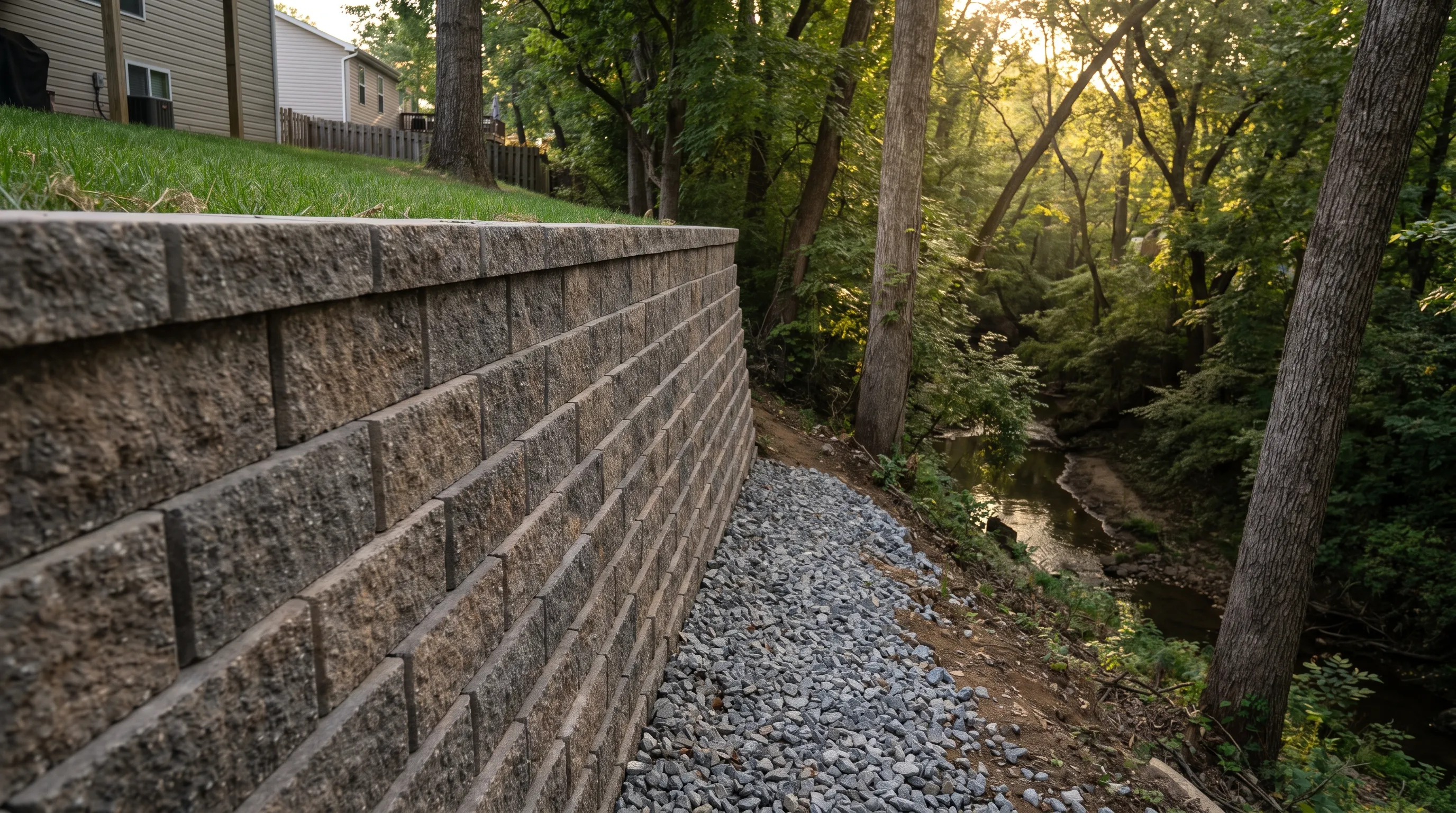
Convent Glen, Orléans Wood and Chatelaine Village date to that original 1970s Minto/Costain building boom, which puts their brick veneer, foundation parging and original concrete at 45 to 55 years old — right where mortar joints fail and slabs settle from decades of clay movement underneath. This isn't a theoretical risk: in spring 2017, a landslide along Bilberry Creek forced the evacuation of three homes on Turnberry Road while the City spent weeks stabilizing the slope. That's the same reactive marine clay under most of Orléans, which is why we favour low-vibration methods — helical piers over driven piles, careful excavation — on any foundation or retaining wall work near a ravine.
The Ottawa River edge of Orléans, toward Cumberland and Petrie Island, has its own separate risk profile: that stretch was hit hard in both the 2017 and record 2019 river floods, so foundation waterproofing gets more attention there than in inland pockets like Fallingbrook or Avalon. And because the clay here holds water differently than the sandier soils in parts of Kanata, interlock and paver installs need a properly compacted granular base underneath — skip that step on Orléans clay and panels settle unevenly within a few seasons.
Most requested in Orleans
All services in Orleans
Orleans questions
+Is it true there was a landslide near here?
+We're near Petrie Island or the Ottawa River — does that change anything?
Nearby areas
Not on the list? If you're within about 30 minutes of these areas, we'll still come look.
Get a free estimate this week.
Send a photo of the problem and we'll tell you what it needs. Most quotes are on site within a couple of days.
Call 613-912-7565Request an estimate online ›Ottawa, Ontario & surrounding areas
613-912-7565
Open 7 days, 9:00am–9:00pm
Licensed & WSIB insured