Concrete repair in Kanata
Kanata isn't one subdivision — it's four distinct building waves stacked side by side, from 1964 Beaverbrook to the tech-boom towers of Kanata Lakes, and each one pours a different kind of concrete problem.
Concrete repair in Kanata
Kanata isn't one subdivision — it's four distinct building waves stacked side by side, from 1964 Beaverbrook to the tech-boom towers of Kanata Lakes, and each one pours a different kind of concrete problem.
What we see most in Kanata
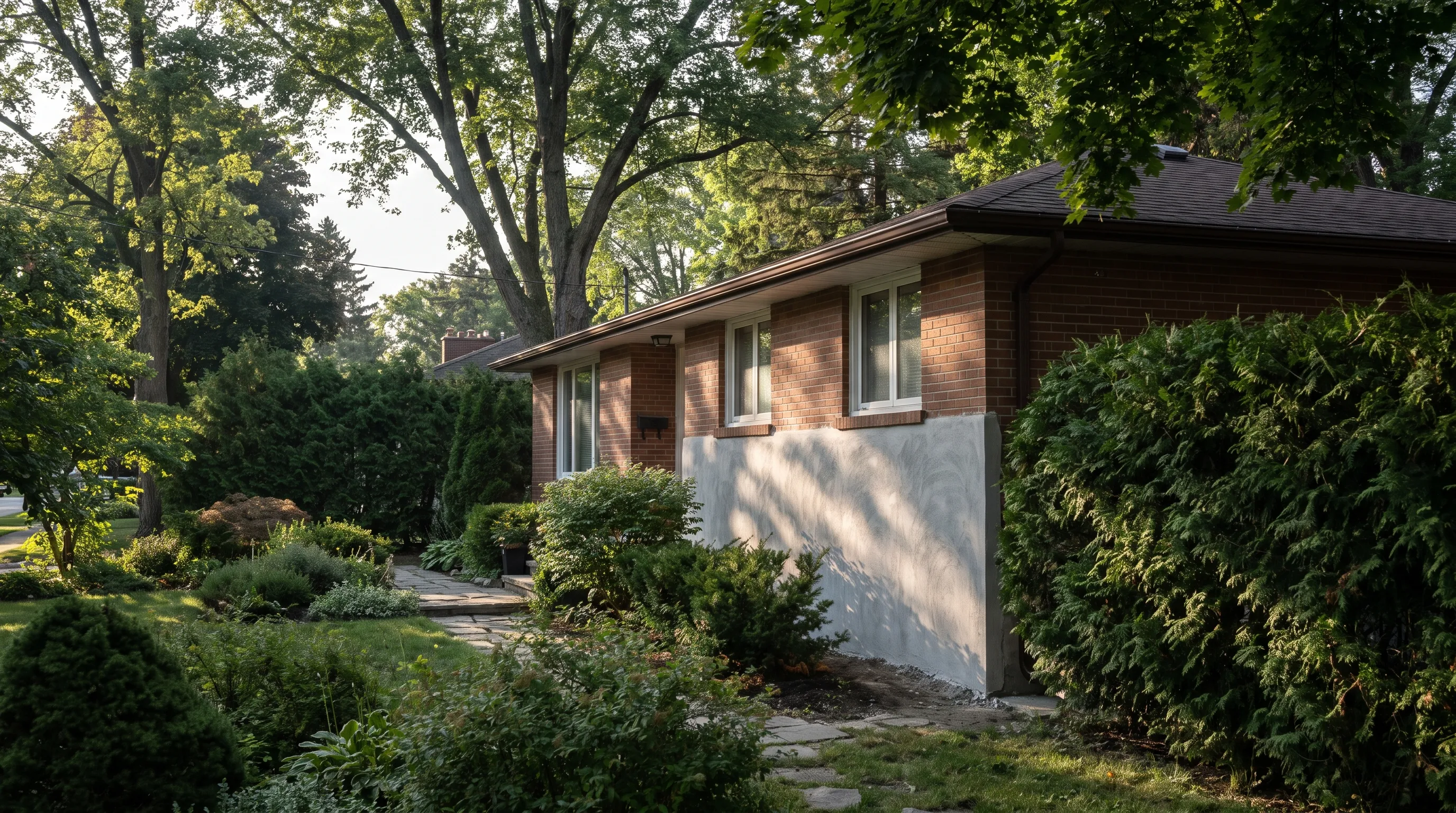
Beaverbrook and Glen Cairn are Kanata's original 1960s streets, some of it built before the 1975 Ontario Building Code set a province-wide minimum for foundation damp-proofing — a few of these homes still have block foundations rather than poured walls, and sixty years on, original mortar joints and parging are simply reaching the end of their service life. Move a decade or two later into Katimavik-Hazeldean and Bridlewood and the pattern shifts to stair-step cracking in brick veneer: Ottawa's marine clay shrinks away from footings in a dry summer, then swells back in the fall, and that seasonal push-pull is what opens diagonal cracks near windows and doors on 1970s–90s production homes.
Kanata Lakes and Morgan's Grant came later still, built out through the tech-boom 1990s and 2000s, and a lot of those homeowners invested in higher-end interlock driveways and patios that are now old enough to need lifting and re-basing over the same reactive clay underneath. And along the western edge — Kanata West, Kanata Highlands, and the river-facing side of Glen Cairn and Beaverbrook — the Carp River has a documented flood history stretching back to the 1990s, so foundation and retaining wall work there gets checked against drainage and grading first, not just poured to match the street.
Most requested in Kanata
All services in Kanata
Kanata questions
+Our house is an original Beaverbrook build — can you work around the hedges instead of fences?
+We're in Kanata West near the Carp River — does that change how you approach foundation or retaining wall work?
Nearby areas
Not on the list? If you're within about 30 minutes of these areas, we'll still come look.
Get a free estimate this week.
Send a photo of the problem and we'll tell you what it needs. Most quotes are on site within a couple of days.
Call 613-912-7565Request an estimate online ›Ottawa, Ontario & surrounding areas
613-912-7565
Open 7 days, 9:00am–9:00pm
Licensed & WSIB insured